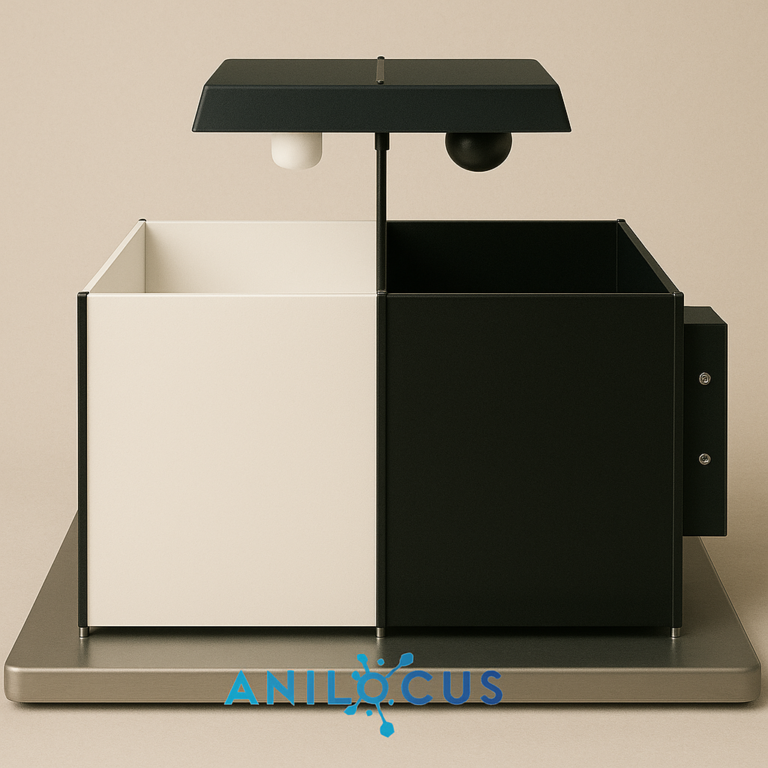
This protocol measures social preference and novelty recognition in rodents using a standardized three-compartment behavioral apparatus. The test evaluates approach behaviors toward social stimuli versus objects, providing quantitative data on social interaction deficits commonly studied in autism research models and neurodevelopmental disorder investigations. By the end of the experiment, you should be able to complete the behavioral assessment with social interaction data suitable for statistical analysis.
What is the 3-chamber sociability test?
The 3-chamber sociability test serves as a fundamental tool for researchers studying autism spectrum disorders, social anxiety, and neurodevelopmental conditions in animal models. This standardized behavioral assessment quantifies social preference and social novelty recognition, two core domains significantly affected in autism (Rein et al, 2020). The test helps evaluate therapeutic interventions and genetic modifications by measuring approach behaviors toward social stimuli versus inanimate objects. Researchers assess readiness by confirming access to appropriate test subjects, adequate housing conditions, and proper video recording equipment for behavioral analysis.
Prerequisites
- Basic knowledge of rodent handling techniques
- Understanding of experimental design principles
- Familiarity with behavioral scoring methods
- Access to appropriate animal subjects and housing facilities
- Institutional Animal Care and Use Committee (IACUC) approval
Objectives
- Measure social preference in test subjects using standardized protocols
- Assess social novelty recognition capabilities
- Quantify social approach behaviors and interaction patterns
- Generate reliable behavioral data suitable for statistical analysis
- Evaluate potential therapeutic interventions or genetic modifications
Duration:
02:30:00 (including setup, habituation, testing phases, and cleanup)
Estimated Cost
$2,850 USD (assuming purchase of all new equipment and materials)
Supplies
- 3-chamber test apparatus (clear acrylic or similar material)
- Wire containment cups (2, appropriate size for stimulus animals)
- Video recording system with high-resolution capability
- Digital timer with second precision
- Data recording sheets or digital forms
- Cleaning supplies (70% ethanol solution)
- Paper towels for apparatus cleaning
- Disposable nitrile gloves
- Animal transport containers
- Stimulus animals (age-matched, same species)
Tools
- Behavioral tracking software
- Computer with adequate processing power for video analysis
- Precision stopwatch as backup timing device
- Adjustable camera tripod for consistent positioning
- Measuring tape for apparatus verification
- Digital scale for weighing subjects
- Ambient light meter for consistent illumination
Materials
Rodent test subjects, stimulus animals, bedding material, food pellets, water bottles, identification markers, laboratory notebooks
Protocol
Step 1: Establish Baseline Measurements
Record initial subject weight, age, strain, and housing conditions in detailed laboratory notebooks. Document any previous behavioral testing history and current health status through veterinary assessment. Take baseline measurements of the testing chamber dimensions (typically 60cm x 40cm x 22cm) and verify all equipment functionality through systematic checks. This baseline data ensures consistent testing conditions and enables proper interpretation of behavioral results. Photograph the complete setup for documentation purposes and future reference.
Step 2: Prepare Testing Environment
Clean the 3-chamber apparatus thoroughly with 70% ethanol solution and allow to air dry completely for 10 minutes. Position the apparatus in a quiet room with consistent lighting (200-300 lux) and minimal external noise. Set up the video recording system with clear views of all three chambers at 30 frames per second minimum. Ensure the room temperature remains between 20-22°C throughout testing. Place wire containment cups in designated positions within the side chambers for subsequent stimulus placement.
Step 3: Prepare Stimulus Animals
Select age-matched stimulus animals (typically 8-12 weeks old) that have never interacted with test subjects to avoid familiarity bias. Ensure stimulus animals display normal health status and behavior patterns through visual inspection. Place stimulus animals in familiar environments 30 minutes before testing to reduce stress-related behaviors. Verify stimulus animals fit comfortably in wire containment cups (typically 10cm diameter) without distress or escape possibility while maintaining normal movement patterns.
Step 4: Acclimate Test Subject
Allow test subject to explore the entire 3-chamber apparatus freely for 10 minutes with all doors open and no stimuli present. This habituation period reduces anxiety and novelty-seeking behavior that could confound social preference measurements (Moy et al., 2004). Record subject’s movement patterns and ensure normal exploratory behavior including wall-following and center exploration before proceeding. Avoid handling the subject during this phase to prevent stress-induced behavioral changes.
Step 5: Conduct Sociability Phase
Place one stimulus animal in a wire cup in the left chamber and an empty wire cup in the right chamber as control. Allow test subject to explore freely for 10 minutes while recording all behaviors continuously. The subject should demonstrate preference for the social stimulus over the empty cup in normal conditions. Measure time spent in each chamber using precise timing methods and record sniffing behaviors directed toward each stimulus location with second-level accuracy.
Step 6: Conduct Social Novelty Phase
Replace the empty wire cup with a second unfamiliar stimulus animal while keeping the original stimulus animal in place. Allow test subject to explore freely for 10 minutes while recording all interactions continuously. Normal subjects should show preference for the novel social stimulus over the familiar one, indicating intact social memory (Nadler et al., 2004). Record interaction times and approach behaviors toward both stimuli with detailed behavioral annotations for subsequent analysis.
Step 7: Clean and Document Results
Remove all animals carefully and thoroughly clean the apparatus with 70% ethanol between subjects to eliminate olfactory cues. Document all behavioral measurements including time spent in each chamber, sniffing duration, and number of approaches to each stimulus location. Save video recordings with clear file naming conventions including subject identification, date, and testing phase. Ensure all data undergoes immediate backup storage and proper labeling with subject identification and testing date for future analysis.
Analyze the Results
Quantitative Analysis Methods
Calculate time spent in each chamber as a percentage of total testing time (600 seconds per phase). Normal sociability requires spending significantly more time in the social chamber compared to the empty chamber during phase 1, typically >60% of total time. For social novelty assessment, subjects should spend more time with the novel stimulus compared to the familiar one, indicating intact social recognition memory. Use statistical tests like paired t-tests or repeated measures ANOVA to determine significance levels (p<0.05). Create preference indices by calculating (social time – nonsocial time)/(social time + nonsocial time) for standardized comparisons.
Behavioral Scoring Protocols
Score specific behaviors including direct sniffing of wire cups (nose within 2cm), approaches toward stimuli (defined as oriented movement toward stimulus), and time spent within 5cm of each stimulus location. Calculate interaction ratios by dividing social stimulus interaction time by total interaction time across both stimuli. Document any repetitive behaviors, excessive grooming, or avoidance patterns that might indicate stress or abnormal social responses. Create detailed ethograms recording behavior frequency and duration for comprehensive analysis of social interaction patterns.
Troubleshooting
Subject Shows No Chamber Preference
This may indicate inadequate habituation periods or elevated anxiety levels affecting normal exploratory behavior. Increase habituation time to 15 minutes and ensure testing environment maintains quiet conditions with consistent lighting. Check that stimulus animals display appropriate age and size characteristics for effective social stimulation. Verify that the subject demonstrates normal exploratory behavior patterns before introducing social stimuli to rule out locomotor deficits.
Stimulus Animal Distress Signals
If stimulus animals show signs of distress including excessive vocalizations, attempts to escape, or frozen postures, replace with calmer animals and ensure wire cups provide adequate ventilation and space. Consider using slightly larger containment systems (12cm diameter) or pre-habituating stimulus animals to the containment cups for 10 minutes daily over three days. Monitor stimulus animal behavior continuously and remove any showing signs of illness or extreme stress.
Equipment Malfunctions
Maintain backup recording equipment including secondary cameras and spare memory cards for uninterrupted data collection. If tracking software fails, manually score behaviors using printed data sheets with predetermined time intervals (every 30 seconds). Ensure adequate lighting levels (200-300 lux) and optimal camera positioning to capture all chambers clearly without shadows or reflections. Keep spare batteries and additional memory cards readily available and test all systems before each experimental session.
Inconsistent Results Across Sessions
Maintain strict environmental controls including consistent room temperature, lighting levels, and time of day for testing. Ensure all personnel follow identical protocols and undergo training in behavioral scoring techniques. Use the same stimulus animals across test sessions when possible and maintain detailed records of all variables that might affect behavior. Consider implementing inter-rater reliability assessments to ensure consistent behavioral scoring across different observers.
Data Analysis and Interpretation
Analyze behavioral data using appropriate statistical software (R, SPSS, or GraphPad Prism) with established protocols for repeated measures designs. Calculate effect sizes using Cohen’s d for meaningful interpretation of results beyond statistical significance. Generate preference indices and interaction ratios for standardized comparisons across different experimental groups. Create detailed behavioral profiles including latency to first approach, total interaction time, and number of approaches for comprehensive assessment.
Compare results to established normative data from control populations and published literature values. Consider biological significance alongside statistical significance when interpreting results. Document any deviations from expected behavioral patterns and potential confounding variables that might influence interpretation. Prepare data for publication following established guidelines for behavioral research reporting.
Quality Control Measures
Implement systematic quality control procedures including equipment calibration before each testing session and regular maintenance of video recording systems. Conduct pilot testing with known control groups to verify system functionality and establish baseline performance metrics. Maintain detailed laboratory notebooks documenting all procedures, equipment settings, and environmental conditions for each experimental session.
Establish inter-rater reliability through independent scoring of identical video recordings by multiple trained observers. Calculate correlation coefficients and resolve discrepancies through consensus meetings. Document all protocol modifications and their rationale for maintaining experimental integrity across time periods and different research personnel.
This methodology represents standard procedures established through collaborative research at multiple academic institutions, validated across diverse rodent strains, and refined through continuous use in behavioral neuroscience laboratories worldwide since 2004.
Key Takeaways
- The 3-chamber sociability test provides standardized quantitative assessment of social preference and novelty recognition in rodent models.
- Proper habituation periods and environmental control prevent anxiety-related confounding factors that compromise behavioral measurement accuracy and reliability.
- Experts recommend this assay as essential for autism research, therapeutic evaluation, and genetic modification assessment in neuroscience.
Related Articles
- Open Field Test for Anxiety Assessment Protocol – Comprehensive protocol for measuring anxiety-like behaviors in rodents using locomotor activity patterns and exploration metrics.
- Social Interaction Test in Pairs Behavioral Assessment – Direct assessment method for measuring reciprocal social behaviors between two freely interacting animals without barriers.