
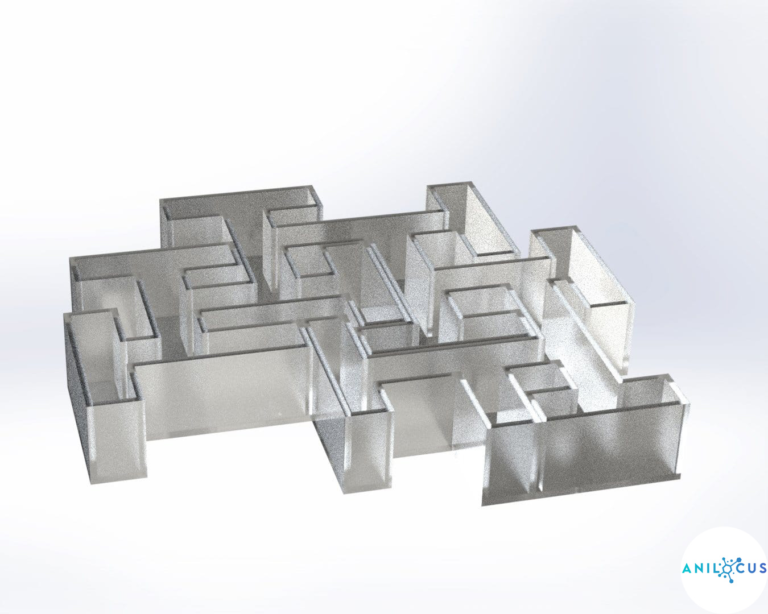
This protocol measures reciprocal social behaviors between two freely interacting rodents without physical barriers or restraints. The test evaluates mutual social approach, investigation, and communication patterns, providing quantitative data on social motivation and interactive behaviors commonly studied in autism spectrum disorder research and social anxiety investigations. By the end of the experiment, you should be able to complete the behavioral assessment with dyadic social interaction data suitable for statistical analysis.
What is the Social Interaction Test in Pairs?
The social interaction test in pairs serves as a fundamental behavioral assay for measuring direct reciprocal social behaviors between two freely moving animals in a neutral environment. This standardized assessment quantifies social approach behaviors, mutual investigation, and interactive communication patterns that reflect social motivation and competence (File & Seth, 2003). The test helps evaluate the effects of pharmacological interventions, genetic modifications, and environmental manipulations on bidirectional social behaviors by measuring spontaneous interactions without physical constraints. Researchers assess readiness by confirming access to appropriate test subjects, standardized neutral testing environment, and reliable video recording systems for comprehensive behavioral quantification.
Prerequisites
- Basic knowledge of rodent handling and pair-housing considerations
- Understanding of social behavioral measures and interaction patterns
- Familiarity with video recording and dual-subject behavioral scoring
- Access to appropriate animal subjects and neutral testing environments
- Institutional Animal Care and Use Committee (IACUC) approval
Objectives
- Measure reciprocal social approach and investigation behaviors
- Assess mutual communication patterns and social motivation
- Quantify interactive social behaviors and contact duration
- Generate reliable dyadic behavioral data suitable for statistical analysis
- Evaluate potential social enhancing or reducing treatment effects
Duration:
02:15:00 per pair (assumes 10-minute testing session with 45-minute acclimation, 20-minute setup, and 15-minute cleanup). For multiple pairs: add 25 minutes per additional pair for testing and inter-pair cleaning.
Estimated Cost
$1,850 USD (assuming purchase of all new equipment and materials)
Supplies
- Neutral testing arena (rectangular or square, typically 60cm x 40cm)
- Video recording system with wide-angle lens capability
- Digital timer with second precision
- Data recording sheets or digital forms for dual subjects
- Cleaning supplies (70% ethanol solution)
- Paper towels for apparatus cleaning
- Disposable nitrile gloves
- Individual animal transport containers (2)
- Overhead lighting system with even illumination
- Sound dampening materials for testing room
Tools
- Behavioral tracking software with dual-subject capability
- Computer with adequate processing power for two-animal analysis
- Precision stopwatch as backup timing device
- Adjustable camera mount for optimal positioning
- Measuring tape for apparatus verification
- Digital scale for weighing both subjects
- Ambient light meter for illumination consistency
Materials
Paired rodent test subjects, neutral bedding material, identification markers (different colors), laboratory notebooks, calibration objects, backup storage devices
Protocol
Step 1: Establish Baseline Measurements
Record initial weight, age, strain, and housing conditions for both subjects in detailed laboratory notebooks with clear identification markers. Document any previous social testing history and current health status through systematic observation of both animals. Take baseline measurements of the neutral testing arena dimensions and verify all equipment functionality through comprehensive checks. This baseline data ensures consistent testing conditions and enables proper interpretation of dyadic behavioral results. Photograph the complete setup including subject identification methods and camera positioning for documentation purposes.
Step 2: Prepare Testing Environment
Clean the testing arena thoroughly with 70% ethanol solution and allow to air dry completely for 15 minutes to eliminate residual odors. Position the apparatus in a quiet room with consistent overhead lighting (300-400 lux) and minimal external noise interference. Set up the video recording system with clear views of the entire arena capable of tracking two subjects simultaneously at 30 frames per second minimum. Ensure the room temperature remains between 20-22°C throughout testing. Install fresh neutral bedding material that neither subject has previously encountered.
Step 3: Select and Prepare Subject Pairs
Select age-matched subjects (typically 8-12 weeks old) that have never interacted previously to ensure genuine social novelty. Ensure both subjects display normal health status and similar activity levels through visual inspection and weight comparison. Apply different colored identification markers to enable individual tracking during video analysis. Verify that subjects are of appropriate size compatibility to prevent aggressive interactions or dominance-related confounds. Document the pairing strategy and randomization procedures for experimental design integrity.
Step 4: Individual Acclimation Phase
Transport each subject separately to the testing room in individual containers 45 minutes before testing to allow environmental acclimation. Allow each subject to explore the neutral testing arena individually for 5 minutes to reduce novelty-induced anxiety without creating territorial familiarity. Return subjects to separate holding containers within the testing room to maintain environmental exposure while preventing premature social contact. Monitor both subjects for signs of excessive stress or unusual behavior that might compromise test validity.
Step 5: Conduct Paired Social Interaction Test
Place both subjects simultaneously in opposite corners of the neutral testing arena and immediately begin video recording for the predetermined duration (typically 10 minutes). Allow subjects to interact freely without interference or disturbance throughout the testing period. Monitor both subjects continuously for safety while avoiding any actions that might influence social behaviors. Record all spontaneous interactions including approaches, investigations, following, grooming, and play behaviors. Ensure the tracking system captures movement and interaction data for both subjects accurately throughout the entire session.
Step 6: Separate Subjects and Clean Arena
Remove both subjects carefully after the testing period concludes and return to separate housing immediately to prevent post-test interactions. Thoroughly clean the testing arena with 70% ethanol solution to eliminate olfactory cues that might influence subsequent pairs. Allow the apparatus to air dry completely between pairs (minimum 10 minutes). Document any unusual behaviors, aggressive interactions, or equipment malfunctions that occurred during testing. Save video recordings with clear file naming conventions including both subject identifications, date, and testing conditions.
Step 7: Data Processing and Interaction Analysis
Process video recordings through behavioral tracking software capable of analyzing dual-subject interactions to extract quantitative measures including mutual approach frequency, contact duration, and following behaviors. Verify automated tracking accuracy by manually checking representative samples of interaction data for both subjects. Calculate derived measures such as social preference indices, reciprocity ratios, and temporal patterns of interaction. Ensure all data undergoes immediate backup storage and proper labeling with both subject identifications and experimental conditions for future analysis.
Analyze the Results
Primary Social Interaction Measures
Calculate total interaction time as the cumulative duration when subjects are within 5cm of each other, with normal pairs typically showing 30-60% of session time in close proximity. Measure approach frequency by counting oriented movements toward the partner, with healthy social motivation indicated by 10-25 approaches per 10-minute session. Calculate following behavior duration when one subject trails another continuously for >2 seconds. Generate reciprocity indices by comparing mutual versus unidirectional interactions. Use statistical tests like paired t-tests or repeated measures ANOVA to compare treatment groups (p<0.05 significance level).
Advanced Behavioral Interaction Analysis
Analyze temporal patterns of social interaction by dividing sessions into 2-minute intervals to detect habituation effects and sustained social interest. Calculate social investigation behaviors including anogenital sniffing, facial investigation, and body sniffing as indicators of social recognition and communication. Measure play behaviors such as rough-and-tumble play, chasing, and pinning for assessment of positive social engagement. Document aggressive behaviors including biting, wrestling, and defensive postures as potential confounding factors. Create detailed interaction profiles including latency to first contact, longest continuous interaction, and social dominance patterns.
Troubleshooting
Subjects Show Aggressive Interactions
This may indicate inappropriate subject selection, territorial behavior, or stress-related responses affecting normal social behavior. Immediately separate subjects if aggressive interactions persist beyond brief investigative behaviors. Verify that subjects are age-matched, similarly sized, and from compatible strains known for non-aggressive social interactions. Consider extending individual acclimation periods to 60 minutes and ensuring adequate space (minimum 60cm x 40cm arena). If aggression persists, exclude the pair from analysis and consult veterinary staff regarding subject selection criteria.
One Subject Dominates All Interactions
This may reflect natural individual differences in social motivation or environmental factors affecting behavioral expression. Document dominance patterns systematically and analyze data from both active and passive interaction perspectives. Consider balancing pairs based on pre-screening for activity levels and social responsiveness. Verify that environmental conditions do not favor one subject over another through arena design or lighting gradients. Include dominance measures in statistical analyses to account for asymmetric interaction patterns.
Subjects Show No Social Interest
This may indicate excessive stress, illness, or environmental factors preventing normal social motivation. Verify that room temperature, lighting levels, and noise conditions meet specifications for optimal social behavior expression. Check both subjects’ health status and previous social experience for potential factors affecting social responsiveness. Consider extending acclimation time to 60 minutes and ensuring appropriate arena size for comfortable exploration. If social avoidance persists, exclude subjects from analysis and evaluate housing and handling procedures.
Tracking System Cannot Distinguish Subjects
Maintain clear visual identification markers and ensure adequate contrast between subjects and background surfaces. If automated tracking fails, manually score interactions using predetermined behavioral definitions and time sampling methods (every 15 seconds). Ensure adequate lighting levels (300-400 lux) and optimal camera positioning to capture clear subject differentiation. Consider using subjects of different coat colors or strains when possible to improve automated tracking accuracy and reliability.
Data Analysis and Interpretation
Analyze dyadic behavioral data using appropriate statistical software (R, SPSS, or GraphPad Prism) with established protocols for paired observations and repeated measures. Calculate effect sizes using Cohen’s d for meaningful interpretation of treatment effects on social behavior beyond statistical significance. Generate normalized interaction scores for cross-strain comparisons and developmental analyses. Create detailed behavioral profiles including correlations between different interaction measures (approach frequency vs. contact duration) for comprehensive assessment of social competence.
Compare results to established normative data from control populations and published literature values for specific strains and testing conditions. Consider biological significance alongside statistical significance when interpreting pharmacological or genetic intervention effects on social behavior. Document any deviations from expected interaction patterns and potential confounding variables that might influence interpretation. Prepare data for publication following established guidelines for social behavior research reporting including detailed dyadic analysis methodologies.
Quality Control Measures
Implement systematic quality control procedures including daily equipment calibration and regular maintenance of dual-subject video recording systems. Conduct pilot testing with known control pairs to verify system functionality and establish baseline interaction metrics. Maintain detailed laboratory notebooks documenting all procedures, equipment settings, environmental conditions, and subject pairing strategies for each experimental session. Establish standard operating procedures for all personnel involved in social behavioral testing.
Establish inter-rater reliability through independent scoring of identical video recordings by multiple trained observers for both subjects simultaneously. Calculate correlation coefficients (r>0.90) for interaction measures and resolve discrepancies through consensus meetings and additional training. Document all protocol modifications and their rationale for maintaining experimental integrity across time periods and different research personnel. Implement regular quality assurance reviews to ensure consistent methodology and data quality standards for dyadic behavioral assessment.
This methodology represents standard procedures established through collaborative research at multiple academic institutions, validated across diverse rodent strains, and refined through continuous use in social neuroscience laboratories worldwide since the 1980s.
Key Takeaways
- The social interaction test in pairs provides standardized quantitative assessment of reciprocal social behaviors and communication in rodent models.
- Proper subject selection and neutral environment control prevent confounding factors that compromise social behavioral measurement accuracy and reliability.
- Experts recommend this assay as essential for social neuroscience research, autism studies, and social intervention therapeutic assessment.
Related Articles
- 3-Chamber Sociability Test Step-by-Step Protocol – Comprehensive protocol for measuring social preference and novelty recognition using controlled stimulus presentation in rodent models.
- Open Field Test for Anxiety Assessment Protocol – Standardized protocol for measuring anxiety-like behaviors and locomotor activity patterns in individual rodent subjects.